
RCCS is co-sponsoring the following talk on Zoom, hosted by the Department of Asian Languages and Cultures. Zoom link can be found in the following.
Abstract
This talk explores the aesthetic, affective, and political dimensions of leftist melancholy in Chinese and Sinophone literature following the collapse of Mao’s Cultural Revolution. I focus on the literary and intellectual exchanges between the Taiwanese Marxist Chen Yingzhen 陳映真 (1937–2016) and the Shanghai-based novelist Wang Anyi 王安憶 (1954–) to illustrate how left-wing writers on both sides of the Taiwan Strait come to terms with the ruins of socialist utopia. As one of those veteran Marxists whose faith in socialism was shaken by the human costs of Mao’s utopian experiment, Chen Yingzhen’s melancholic reflections on the failure of radical politics were underpinned by a persistent belief in the messianic promise of revolution. Wang Anyi, on the other hand, sought to overcome her sense of exhaustion and ennui in the 1990s by drawing inspiration from Chen Yingzhen’s utopian socialism. In delineating the rifts and affinities that both created tensions and nourished the friendship between the two writers, I explore their melancholy efforts to confront disillusionment, resignation, guilt, and forgetting in the postrevolutionary era.
Bio
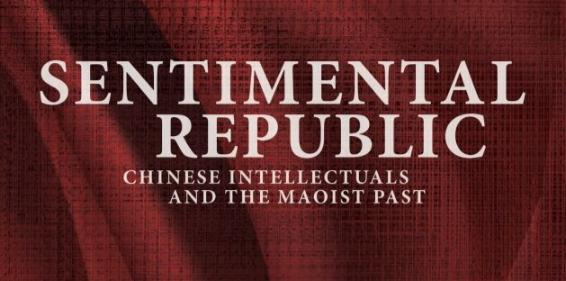
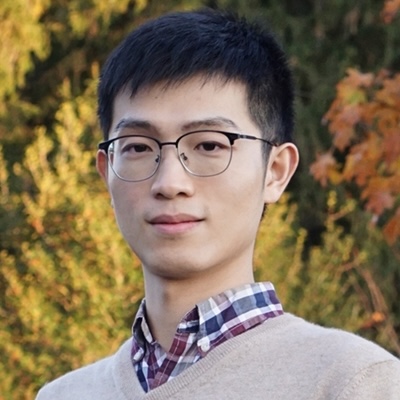
Hang Tu is assistant professor of Chinese Studies at the National University of Singapore. His primary research interests center on the cultural politics of emotion in modern and contemporary China. His monograph, Sentimental Republic: Chinese Intellectuals and the Maoist Past (Harvard University Asia Center, 2025), proposes emotion as a new critical framework to approach post-Mao intellectual polemics. His recent publications in journals have appeared in Critical Inquiry, The Journal of Asian Studies, Modern Intellectual History, MCLC, and Prism.
Zoom link
https://rutgers.zoom.us/j/93001898096?pwd=XaC8dsOa5W0bW8TC4nWQtXponK7lGg.1
Meeting ID: 930 0189 8096
Password: 620487